Think first, trend later: How to do smart reactive on social media
Jumping on a trend isn’t a reactive strategy, it’s panic posting.
Every week, brands sprint after the same sound, the same meme format, the same “POV:” hook. Same week, same idea, same forgettable result. And by the time everyone’s approved it, the internet has moved on.
Most brands aren’t short on speed, they’re short on ideas that are actually theirs. Social moves fast, but speed without a point of view just gets you to irrelevance faster.
The brands that get reactive right have done the thinking before the moment arrives. They understand their place in culture, what their audience cares about and where they have permission to join the conversation.
So when culture moves, they’re not asking “should we do this?” They’re asking “what can we meaningfully add?”
Sometimes that’s a social post, a creator collaboration, a brilliantly timed comment, a journalist conversation or something IRL. Sometimes, it’s knowing when to sit one out.
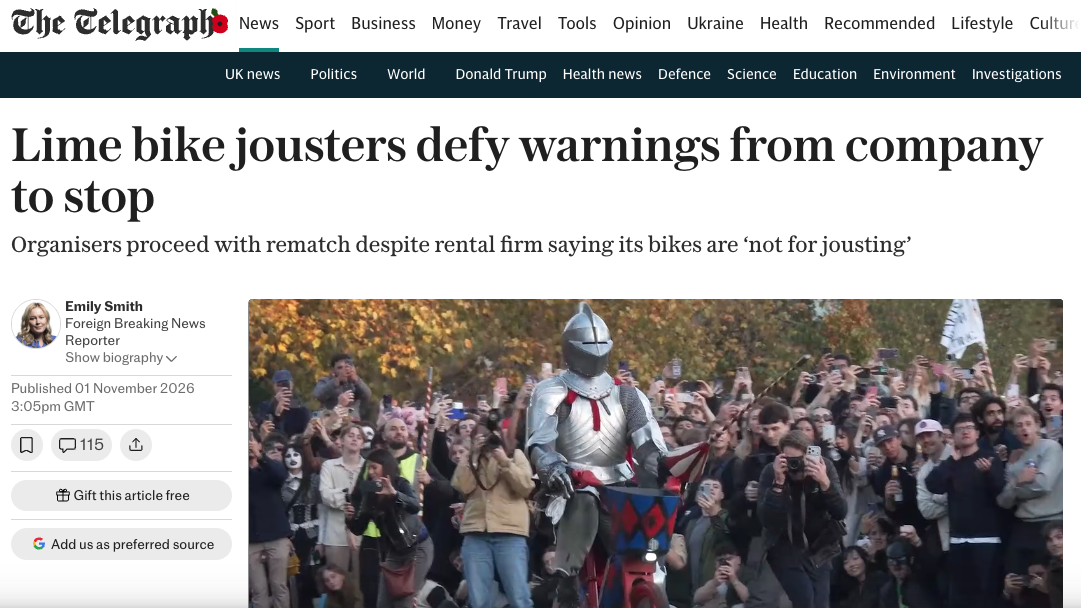
Take the Lime bike joust. In October, two artists swapped horses for rental e-bikes in London Fields and hundreds turned up to watch. Lime didn’t ignore it and it didn’t pile in. It welcomed the community spirit but made one thing clear: its bikes aren’t for jousting.
Fair enough. Nobody wants a medieval health-and-safety incident on their hands.
Cultural relevance doesn’t mean saying yes to everything. Sometimes the smartest reaction is knowing where your brand draws the line. There’s a difference between joining a conversation and desperately trying to make it about you.
So how do you know when a moment is yours? Run it through four tests. Pass at least three and you’re probably onto something. Fail the first one and sit it out, whatever the other three say.
1. The Benefit Ladder
Functional. Emotional. Identity.
Every brand has three rungs: what your product does, how it makes someone feel and what it says about them.
A Nike running shoe hits pavement (functional), makes you feel fast (emotional) and signals you’re the kind of person who’s up at 6am voluntarily (identity).
Now hold your reactive idea against that ladder. Which rung does it land on? A running brand reacting to a viral marathon-finish moment is on solid ground. The same brand piling onto a celebrity break-up meme isn’t.
If you can’t connect the moment to what your brand does, how it makes people feel or what it represents, you’re just borrowing someone else’s relevance. And audiences are pretty good at spotting that. They know when a brand has something to say and when it’s simply turned up because everyone else has.
2. The Use Case
Write down 25 ways people actually use your product. Then four content ideas for each. That’s 100 ideas.
Yes, it’s Social Media 101. But this is the bank you react from. When a trend breaks, you shouldn’t be inventing a reason to join. You should be matching it to a use case you already know exists, using the formats and language your audience naturally responds to.
A tea brand knows people reach for it when they’re ill, stressed or procrastinating, so a viral “doing nothing” trend is a natural fit. A viral gaming meme isn’t.
Think beyond the obvious occasions, too. What rituals, communities, frustrations or unexpected behaviours surround your product? What are people doing with it that you’d never put in a campaign brief?
Because understanding what people do with your product is useful. Understanding what it means to them is where the interesting work begins.
3. Check It Against Your Content Pillars
Three to five core themes tied to your brand. The most basic social strategy there is, but one worth remembering.
When a moment hits, don’t just ask “what’s trending?” Ask “which pillar does this belong to?”
Take Greggs. Its feed consistently returns to two things: making a hero of its products, from sausage rolls to seasonal drops, and proudly unglamorous British humour.
New bake? Hero treatment. National talking point? Self-deprecating humour. Same brand, every time. Which is precisely why people expect Greggs to show up and enjoy it when it does.
But good content pillars shouldn’t stop at your Instagram grid. At Full Fat, we build them to flex across social, community, creator partnerships and earned media, so a single reactive idea might start as a comment, become a creator collaboration or give a journalist a brilliant story.
That matters because a social post might be forgotten tomorrow, but a well-timed story can keep working long after the trend disappears. Earned coverage also builds a lasting, searchable record of a brand’s perspective, including in AI-powered discovery.
The aim isn’t to make one reactive post travel further. It’s recognising when an idea deserves to become something bigger.
4. The Customer Support Goldmine
Go read your last 50 support tickets, DMs, reviews or Reddit threads.
This is your audience telling you, unprompted, what they actually care about. Complaints, questions, unexpected uses and conversations nobody in the marketing team saw coming.
If a trend echoes something customers are already discussing, you’ve got a much stronger reason to join it.
Vaseline nailed this. People were already flooding TikTok and Instagram with DIY Vaseline hacks, some clever, some pointless, some downright harmful.
Rather than chasing the trend, Vaseline listened. Its scientists tested the hacks, verified those that worked and debunked the risky ones, with creators helping bring the results back to the community.
Yes, that was a properly produced campaign rather than a quick post, but the principle is the same. The brand didn’t invent a reason to join the conversation. Its customers had already handed it one. Vaseline simply brought something actually useful to the table.
The result? Vaseline Verified, created by Ogilvy Singapore, won a Titanium Lion and two Grands Prix at Cannes Lions 2025.
It’s why at Full Fat, we treat community as a strategy, not an inbox. Our teams listen across comments, DMs, Reddit threads and off-platform conversations, often uncovering the most interesting reactive opportunities.
And for PR, that’s gold. Those conversations can reveal an emerging cultural tension, a fresh editorial angle or a question nobody has properly answered yet. They can also tell us when a brand should listen rather than speak.
Sometimes the best reactive idea isn’t sitting in a brainstorm. It’s been waiting in your comments section all week.
Then make it fast
Remember the approvals problem? The fix is doing the work upfront. Agree your pillars, your red lines and who can say yes before a moment arrives. Then a reactive idea is a quick check against decisions you’ve already made, not a fresh debate at 4pm on a Friday.
Before you post
Run the idea through the four tests. Does it connect to what your brand represents? Does it reflect how people use your product? Does it fit your content pillars? And, most importantly, are your customers already having the conversation?
Because the best reactive work doesn’t begin when something goes viral. It begins with knowing your audience, understanding your place in culture and having the confidence to contribute something worthwhile.
And that’s true whether the response is a TikTok, a journalist pitch, a creator partnership or something much bigger.
Being first is lovely. Having something worth saying is better.
Not sure where your brand sits in culture? Full Fat's Cultural Resonance Index™ measures how deeply your brand connects with it.