
The festival ends. The group chat doesn’t.
We’ve spent a lot of this summer at festivals, talking about them, planning them and, more recently, thinking about what actually survives them.
Because for all the talk of line-ups, stages, production, outfits, £9 pints and the annual debate about whether festivals have become too corporate, we’re increasingly convinced the bit that matters most happens between the people there.
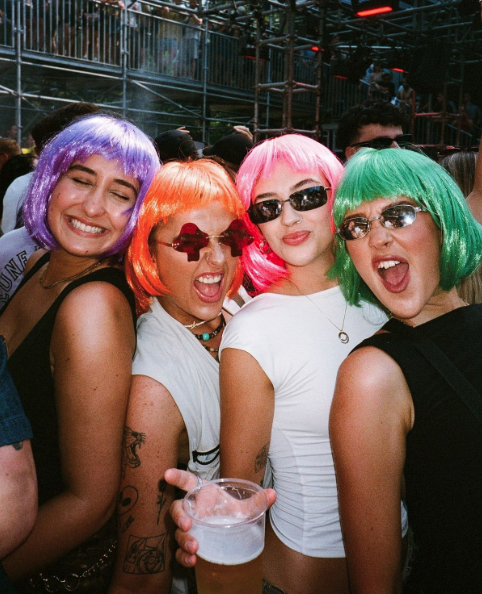
We’ve just come back from Sziget with the usual festival debris: approximately 4,000 photos, no voice and a wristband kept on for slightly too long. More importantly, a WhatsApp group full of people who, a few days earlier, mostly didn’t know each other.
And it’s still going.
That feels quite important because maybe the best measure of a festival isn’t how many people turn up, but whether they’re still talking when everyone goes home.
Fresh out of Notting Hill Carnival, it’s hard not to think about this on a much bigger scale.
Notting Hill is far more than a festival, and its history deserves more than to be reduced to one. Born from resistance and Caribbean community, 60 years later it is still built and sustained by the people, families, sound systems, mas bands and neighbourhoods around it. The floats disappear, the roads reopen, everyone goes back to work with varying levels of enthusiasm, but Carnival doesn’t suddenly cease to exist on Tuesday morning.
The weekend is almost just when we get to see the community in full.
The event is temporary. The community is the infrastructure.
And once you start thinking about it like that, you notice versions of it everywhere.
Festival season now begins months before anyone has considered putting a tent up. Reddit threads become unofficial information desks, WhatsApp groups form, solo festival-goers find each other online, and someone inevitably creates a spreadsheet.
By the time you arrive, half the community building has already happened.
Then normal British social etiquette evaporates- you share food with someone you met 20 minutes ago, you lose your friends and get adopted by somebody else’s, you have conversations in smoking areas that would require six months of friendship in the real world, someone gives you water, lends you a charger, paints your face or tells you their entire life story at 4am.
At Houghton this summer, artist Henry Krokatsis pushed that idea considerably further by getting more than 60 festival-goers to wash and massage complete strangers’ feet as part of Pedilavium, a work about ritual, intimacy and trust.
Would we let a stranger wash our feet in Tesco? Absolutely not.
At a festival? Weirdly… hear us out.
That’s the thing we love about festivals- they give us permission to behave differently with each other.
It’s also probably why festivals feel so baked into Full Fat. The agency started with two twenty-somethings who wanted to spend as much time as humanly possible in front of a stage, chasing that impossible-to-explain collective energy you only really get in a field full of people experiencing the same thing together.
Twenty years and well over 100 festivals later, that feeling still sits behind a lot of what we’re trying to create: moments people actually feel, remember and carry with them.
Because perhaps that's the difference between an experience and a community, and perhaps that's what we risk losing when we talk about festivals purely as products.
There’s been plenty written about the journey from counterculture to corporate culture; from gatherings rooted in rave, protest, DIY and subculture to increasingly polished experiences with brand activations, VIP decks and £15 cocktails. We don’t think commercialisation automatically kills community (we also enjoy a nice toilet), but we do think the distinction matters.
You can manufacture an experience, but you can’t manufacture belonging.
You can book the headliner, build the stage, commission the content, sell the VIP package and put “community” in the strategy deck as many times as you like, but the interesting bit is what people decide to do with it themselves.
The Reddit thread that becomes a friendship, the campsite that reunites every summer, the WhatsApp group that refuses to die, the tradition that gets passed down, the person you met dancing who somehow ends up at your birthday six months later.
The platforms around community have changed, from physical meeting places and word of mouth to Reddit, WhatsApp and endless group chats, but the instinct hasn’t. And that’s worth remembering for festivals, brands and anyone trying to build a “community” in 2026.
After a summer spent working around festivals, the thing we’ve come away thinking about most isn’t actually the music, it’s the people.
If built with care, a festival lasts a weekend. The sense of belonging can last a lifetime.
Photo: Tough Luck