
Spotify can count your fans, but it can’t build fandom.
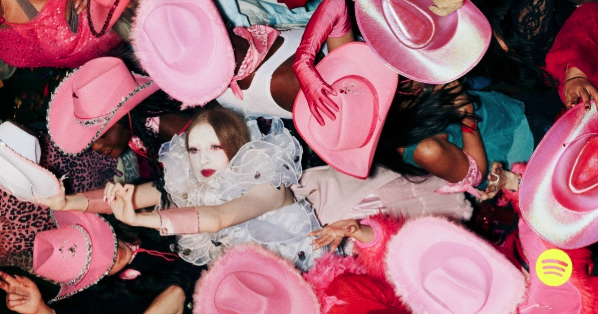
Fandom is the defining cultural force of our time.
86% of Gen Z identify as fans. They plan holidays around it, build their identities through it, tattoo it on their bodies. And yet the platform that soundtracks most of their lives has been quietly working against the very thing that makes music matter: the relationship between an artist and the people who love them.
Streaming has made music frictionless, but frictionless is not the same as meaningful.
Jimmy Iovine, the man who built Interscope, co-created Beats, and helped launch Apple Music, said something recently that's hard to unhear. Speaking about Spotify and its contemporaries, he described streaming services as "minutes away from being obsolete." His reasoning? They've failed to become cultural spaces. Instead, they're ATMs. You put your money in, you get your music, and nobody learns anything about anyone.
They are brilliant utilities, they’re less effective at creating belonging.
The blunter version: Spotify doesn't want artists to have relationships with their fans. Spotify wants fans to have a relationship with Spotify. The listener data and what else they love - is the platform's only remaining moat, and it guards it obsessively.
This is where PR's role shifts and sharpens, and where communications needs to become more ambitious. Because the gap Spotify leaves isn't just a tech problem or a music industry problem. It's a community problem. Building community and creating the conditions for genuine connection between an artist and their audience, is something PR has always been quietly good at- the press trip that becomes a fan moment, the interview that reveals something real, the live moment that rewards a community, the collaboration that feels instinctive rather than engineered, the campaign that gives people a reason to gather…
The story that gives fans something meaningful to carry forward.
That matters in an era when attention can increasingly be simulated, algorithms can amplify visibility, they cannot manufacture belief. We know fandom has never been more relational. Live Nation's 2026 Love Song study found that 96% of Gen Z concertgoers value the moments before and after an event as much as the show itself. Almost 90% would attend a concert alone - fandom isn't background noise, it's a primary identity structure and it craves infrastructure to hold it.
The fan edit economy makes this even clearer. Fan edits represent around 13% of all liked content among Gen Z cohorts. People are not just consuming music but remixing it, memorialising it, sending it back. That's not passive listening. That's devotion with nowhere obvious to go. PR can give it somewhere to go.
The artists and labels already building beyond the ATM have a clue: direct communities, live moments treated as content engines, high-meaning touchpoints that make fans feel like insiders rather than metrics. PR sits right at the centre of that: not as a megaphone, but as an architect of closeness. The music industry spent a decade trying to get a million people to listen once. The smarter move, increasingly, is getting a thousand people to care forever.
Streaming remains essential distribution infrastructure, but it cannot be the entirety of an artist’s cultural strategy. The industry spent a decade optimising for passive reach, the smarter question now is how to create lasting meaning.
Because a stream tells you somebody listened, credibility gives them a reason to stay.